Experts Views

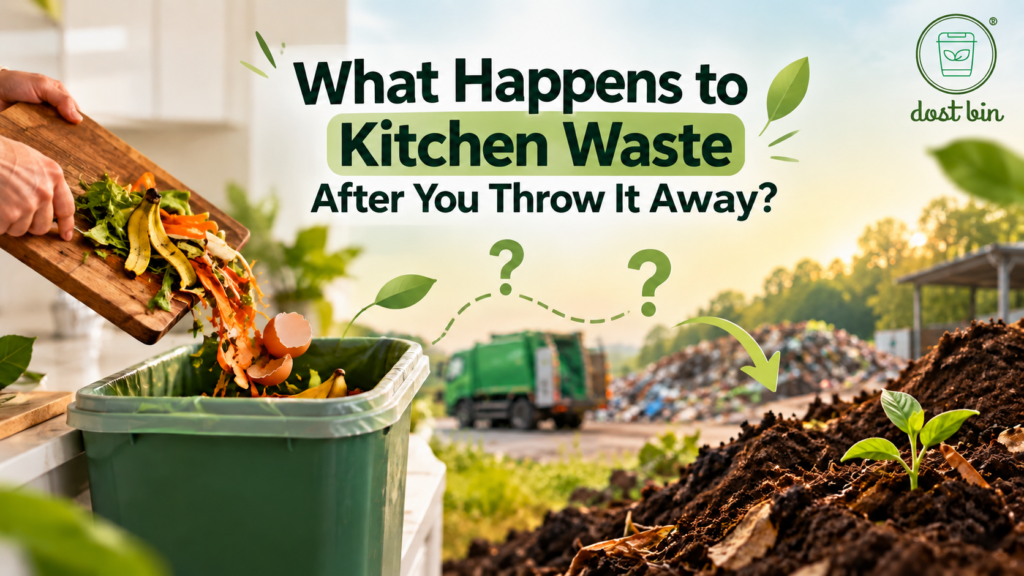
What Happens to Kitchen Waste After You Throw It Away?

Every day, we throw away things like vegetable peels, fruit scraps, leftover food and tea waste without giving much thought to what happens next. Once the kitchen bin is emptied, the waste is out of our sight. But it still has to go somewhere. For most of us, throwing something away feels like the end of the story. In reality, it is only the beginning of its journey. The way we handle kitchen waste can make a big difference. When organic waste is mixed with plastic and other household waste, it becomes difficult to recover or reuse. When it is separated and managed properly, the same waste can be turned into something useful. Where Does Your Kitchen Waste Go? Once your kitchen waste leaves your home, it is collected and transported for further treatment or disposal. If wet waste has been separated properly, it can be sent for organic waste management, composting or other suitable processing methods. But when everything goes into the same bin, food waste gets mixed with plastic, paper, glass and other materials. Think about a leftover piece of food sitting inside a garbage bag with plastic wrappers and bottles. By the time it reaches a waste processing facility, separating everything becomes much more difficult. This is why source segregation matters. A simple habit of keeping wet and dry waste separate can make the entire waste management process easier. What Happens When Kitchen Waste Goes to a Landfill? A lot of household waste eventually ends up in landfills. Food waste does not simply sit there forever. It decomposes over time. The problem is that landfills are not designed specifically for composting organic waste. When organic material breaks down in conditions with limited oxygen, it can produce methane and other gases. At the same time, landfills require large areas of land and continuous management. So instead of sending valuable organic material away as garbage, why not process it where it is produced? This is where kitchen waste composting can make a difference. Your Kitchen Waste Can Become Compost Composting is actually a very natural process. Microorganisms such as bacteria and fungi break down organic material and turn it into compost. The same process happens in nature when leaves and other organic matter slowly decompose. The difference is that composting allows us to manage this process in a controlled way. Vegetable peels, fruit waste, food scraps and other suitable biodegradable materials can be processed and eventually turned into compost from food waste. What started as something you were about to throw away can become something useful for your plants and soil. How Does Kitchen Waste Composting Work? The basic idea behind food waste composting is quite simple. First, suitable organic waste is separated from other household waste. It is then placed into a composting bin or kitchen waste composting machine. For decomposition to happen properly, the compost needs suitable moisture and airflow. Depending on the method being used, the material may also need to be mixed or aerated. Over time, microorganisms break down the organic matter. The food scraps gradually lose their original form and become dark, crumbly compost. The finished compost can then be added to soil, gardens and plant pots. So instead of asking, “Where can I throw this away?” we can start asking, “Can I put this back into the soil?” What Can You Compost? A large part of our everyday kitchen waste is organic and can be composted. This can include: • Vegetable peels• Fruit scraps• Leftover food• Tea waste• Other suitable biodegradable kitchen waste Plastic, glass, metal and other non biodegradable materials should not be added to a composting system. This is why good kitchen waste management starts right in the kitchen. Separating your waste correctly makes everything that follows much easier. Can You Compost at Home? You do not need a huge garden to start home composting. Traditional composting can be done using a suitable bin or composting setup. But for people living in apartments or homes where space is limited, a home composting machine can be a more convenient option. A composting machine for home gives you a dedicated place to process your kitchen waste instead of sending it out with the rest of your household garbage. The right solution depends on how much waste your household generates, how much space you have and how much daily effort you want to put into composting. What About Apartment Waste? Managing waste becomes a little different when you live in an apartment. One building can have hundreds of people generating kitchen waste every day. If all of that wet waste is simply collected and transported elsewhere, the quantity can quickly add up. This is where wet waste management for apartments becomes important. Apartment communities can collect their organic waste separately and explore ways to process it within the premises. A suitable composting machine for apartments can help communities manage their wet waste closer to where it is generated. Instead of truckloads of organic waste leaving the community every day, some of that waste can be processed and converted into compost. What About Offices, Hotels and Institutions? The same idea applies to places such as hotels, offices, schools and other institutions. These locations can generate a considerable amount of food and organic waste every day. For them, bulk organic waste management becomes an important part of responsible waste handling. Depending on the quantity of waste, organisations can explore on site wet waste management solutions that allow organic waste to be processed closer to its source. It is a simple shift in thinking. Rather than seeing organic waste only as something that needs to be transported away, it can be treated as a resource that can be processed locally. What Happens to the Compost? This is where the story gets interesting. The waste that started as vegetable peels, fruit scraps and food leftovers can eventually become compost that goes back into the soil. Finished compost can be used around plants, in gardens and in pots.

What Happens to Kitchen Waste After You Throw It Away? Read More »

Solid Waste Management Rules 2026: What Bulk Generators Must Know — And How DostBin Makes It Easy

India’s Solid Waste Management (SWM) Rules, 2026 come into force on April 1, 2026, replacing the earlier regime with stricter accountability for bulk waste generators. For residential complexes, hotels, hospitals, schools, and commercial campuses, the message is clear: segregate at source, treat wet waste on-site, and digitise compliance—or face environmental compensation. At DostBin Solutions Pvt Ltd, we’ve built our platform around exactly these requirements. Key changes that matter to you – Mandatory four-stream segregation: wet waste (kitchen/organic), dry waste (recyclables), sanitary waste, and special-care waste (e-waste, batteries, etc.). – Bulk Waste Generator definition: floor area >20,000 sq m or water use >40,000 L/day or waste >100 kg/day. Such entities must process waste at source or register under Extended Bulk Waste Generator Responsibility.  – Polluter Pays + digital tracking: CPCB/SPCBs can levy compensation for non-compliance; a centralised portal records waste flow.  How DostBin helps you comply (and save money) 1. On-site wet-waste composting: Our IoT-enabled composters convert kitchen waste to manure in 14-20 days, cutting methane emissions and reducing haulage costs—aligning with the Rules’ waste-hierarchy focus.  2. Four-stream bins + signage: Colour-coded containers and multilingual labels simplify staff/resident adoption. 3. BWG dashboard: Auto-log waste weights, generate monthly compliance reports, and push them to the CPCB portal—no manual paperwork. 4. Training & audits: We certify housekeeping teams on segregation best practices, lowering contamination of dry-waste recyclables. Takeaway: The new rules shift responsibility from city bodies to generators, but they also unlock value—less landfill fee, organic manure for landscaping, and measurable ESG impact. Let DostBin be your compliance partner. Reach out for a campus audit and a zero-obligation pilot. — Team DostBin Solutions Pvt Ltd Source: The Indian Express

Solid Waste Management Rules 2026: What Bulk Generators Must Know — And How DostBin Makes It Easy Read More »

Composting Bin Accessories: Must-Have Tools for Successful Composting

Composting Bin Accessories: Must-Have Tools for Successful Composting Composting is an eco-friendly practice that not only helps you get rid of domestic waste but also provides you with high-quality compost for your garden or plants. Even though the use of composting bins facilitates this, some accessories can further add to the effectiveness of the process. In this article, we will discuss three important accessories that are necessary for performing composting effectively: cocopeat bricks, odor absorbents (charcoal), and remix powder. While such tools might seem trivial, they can help alleviate some of the problems faced in composting especially in the case of kitchen waste, food scraps, and garden waste. 1) Cocopeat Bricks: A Natural Moisture Retainer Cocopeat Bricks which is also referred to as coconut coir or peat, is produced in the process of scrapping of coconut husks. For gardening and composting, it can be used along with soil as it improves water retention and enhances the moisture content in the bins essential for decomposition. Benefits of Cocopeat Powder in Composting: Moisture Control: One of the key benefits of the successful integration of cocopeat powder in composting as well is that it is used to control the moisture dependence of the pile. It is important to note that water as a component is critical when composting. Excess presence of water results in anaerobic processes that will foster foul smell and slow down the processes. The use of the powder will therefore help absorb excessive moisture and help release it when necessary aiding in helping have a good moisture balance needed for decomposition. Improved Aeration: This also enhances the oxygen supply in the compost bin preventing the materials from being compressed, thus providing a favorable environment for beneficial microorganisms to flourish and accelerate the decomposition of the organic materials. Neutral pH: Cocopeat has a neutral pH, making it a perfect additive to compost, as it won’t disrupt the pH levels of your compost pile, which are crucial for healthy compost formation. By adding cocopeat powder after putting wet food waste in your compost bin, you will be able to adjust the balance of your compost bin as well as increase the rate of decomposition. If you are within Bangalore, Pune, or Kerala, you can buy quality cocopeat powder from Dostbin as they plan to broaden their reach across India soon. 2) Odor Absorbers: Keeping Your Compost Smell-Free One of the reservations people have when it comes to composting is the odor that can be generated when the composting bin is situated indoors. However, with suitable odor absorbers, a user can have their compost bin with no odor at all without any stress. How Odor Absorbers Work: Neutralize Odors: Odor-absorbing materials are activated to manage and cancel the smells generated during the biodegradation part of the composting. A common natural ingredient of odor eliminators is activated charcoal which absorbs odor instead of covering it. Safe and Non-Toxic: These products are usually safe to use around pets and children, making them a great choice for homes where compost bins are kept indoors or on balconies. Easy to Use: To keep the air fresh, just place an odor-absorbing package or disk inside your compost bin or close to it. Since composting indoors or in tiny gardens is prevalent in urban environments with limited space, odor absorbers are especially helpful in these situations. Anyone who wishes to prevent the typical complaint of foul smells during composting has to have this attachment.  3) Remix Powder: Accelerating the Composting Process Remix powder is also a must for those who are serious about composting. It is a mix of carbon-rich materials, such as dried leaves, sawdust, and, other biomass, which aims to break the carbon-to-nitrogen ratio in composting bins. Why Remix Powder is Important: Balances Carbon-Nitrogen Ratio: The composting process depends on an even distribution of carbon (browns) and nitrogen (greens). If there is excess nitrogen (such as food scraps), the breakdown gets hindered and odor nuisance becomes a problem. Remix powder assists in this deficiency by supplying the needed carbon which combats unpleasant smells and enhances the rate of composting. Improves Decomposition: You may make sure that your compost decomposes more quickly and effectively by adding remix powder to your compost bin. The powder aids in preserving the ideal environment for aerobic bacteria, which convert organic materials into compost. Prevents Excess Moisture: Remix powder also absorbs excess moisture, preventing smells and preserving a wholesome environment for decomposition. Remix powder can speed up the composting process and guarantee a high-quality final result, whether you’re composting garden trash or leftover kitchen leftovers. Remix powder for composting is offered by Dostbin, which is currently based in Bangalore, Pune, and Kerala with intentions to soon expand throughout India. Elevate Your Composting Experience with the Right Accessories Although composting is a great way to save waste and help the environment, with the correct equipment, the process can be much more efficient. All-important add-ons that can enhance your composting experience—from moisture control to odor management and quicker decomposition—include cocopeat powder, odor absorbers, and remix powder. Your composting bin will work at its peak efficiency with this equipment, giving you rich, nutrient-rich compost for your plants and garden. Are you all set to start composting? To advance your composting, visit Dostbin to acquire these necessary composting bin accessories.

Composting Bin Accessories: Must-Have Tools for Successful Composting Read More »

Cocopeat Powder for Composting: Turning Organic Waste into Black Gold

Cocopeat Bricks for Composting: Turning Organic Waste into Black Gold Composting, a friendly approach to waste disposal, leads to the formation of fertile land. Out of the many composting techniques available, the use of cocopeat powder  accelerates the home-organic composting process. Coconut husk fibers form cocopeat which when added to the composting process, brings more advantages. In this blog, compare why and how cocopeat powder can be used for composting and why should one invest in it particularly when one has Dostbin composting systems. What is Cocopeat Brick? Cocopeat powder comes from coconuts, more accurately from their entrails. It is an off-white substance that is airy, lightweight, and absorbent. It features a neutral PH and coarse fibers making it ideal for composting. There are many other benefits of using cocopeat for composting, some of which are explained below. Importantly, cocopeat saves a considerable amount of waste when building a compost pile. Benefits of Cocopeat Brick for Composting Benefits of cocopeat powder are as follows: 1) Excellent Water Retention The biggest challenge while making compost is maintaining the moisture content. Compressed cocopeat powder can absorb water to a weight of eight times itself making certain that the compost is moist but not to the extent of drowning. This is particularly handy in dry areas or in scenarios where compost is being prepared indoors as extreme dryness slows the whole process. Cocopeat powder maintains the moisture content of the compost making it the best environment for microorganisms that help decompose organic matter. It makes the composting process quicker and easier for you. 2) Improves Aeration and Structure Cocopeat is light and porous which helps reduce the bulk density and therefore enhances the oxygen content of the composted material. Enough oxygen is necessary for the survivability of aerobic bacteria that mainly deal with the decomposition processes. In the presence of cocopeat powder, the compost mass is aerated to prevent the silting up of the organic matter and secure aerobic conditions. The enhanced structure makes it easy to turn and mix the compost during the composting process, which is useful for healthy composting activities. Wouldn’t be great if all the compost was so easily aerated and perfect? Well, it is possible with the help of cocopeat. 3) Neutral pH for Balanced Composting It has to be emphasized that a compost heap is a combination of diverse materials and the pH of these materials influences the quality achieved. The pH of coco peat powder is neutral which means the products do not affect the quality of the compost pile. While composting food waste, garden waste, or even other biowaste materials, coco peat helps to maintain the equilibrium of the compost base whether it be acidic or alkaline. Cocopeat contains essential nutrients and in some instances has a nitrogen content that can improve the structural properties of your compost and balance its pH levels, thus enhancing the breakdown of materials to produce high-quality compost. 4) Sustainable and Environmentally Friendly Cocopeat is ideal for composting because it is composed of materials that are always available, coconut skins. It favors you because it is cost-effective in that it does not only improve your compost but also helps to protect the environment. Further, it is eco-friendly because it is decomposable and therefore will never cause pollution or any damage as it will naturally decay over time without any toxic by-products. Such practices create a ripple effect hence why using cocopeat in composting at home is ideal for any eco-friendly family as they can lower their carbon footprint by making and using all-natural coconuts. Why Purchase Cocopeat Brick for Composting? Investing in cocopeat powder for your home composting system is a smart move for several reasons: Efficiency: Cocopeat speeds up the composting process by maintaining optimal moisture and airflow. Quality Compost: Inducing cocopeat into compost will result in an automatically rich nitrogen content and other nutrients that are necessary for organic gardening. Ease of Use: It makes managing compost easier, preventing clumping and compaction. Sustainability: It’s a natural and eco-friendly product that aligns with sustainable living practices. How to Use Cocopeat Bricks with Dostbin Composting Systems Cocopeat Brick is easy to add to Dostbin composting systems and has many advantages for your composting process. Dostbin compost bins are designed with a separate adjacent compartment specifically for storing cocopeat powder which can be converted from cocopeat brick within this compartment. This means the user can conveniently add it along with kitchen scraps or other organic waste. Mixing cocopeat with scraps is left to DostBin. By absorbing excess moisture, cocopeat helps you maintain the proper balance for efficient decomposition when you add it to your food waste. Aeration inside the compost is improved by the cocopeat in addition to controlling moisture levels, both of which are essential for a quicker and more effective breakdown of organic materials. To maximize the composting process, it’s recommended to regularly mix the cocopeat powder into the compost every few days. This will ensure proper airflow and help the microorganisms thrive, resulting in rich, nutrient-dense compost in no time. Ready to take your composting to the next level? Get DOSTBIN’s premium cocopeat brick now to get the advantages for yourself. Available in Kerala, Bangalore, and Pune; nationwide delivery is on the horizon. Begin your environmentally responsible composting adventure now to produce rich, organic compost for your garden!

Cocopeat Powder for Composting: Turning Organic Waste into Black Gold Read More »

How to Start Home Composting: Choosing the Right Composting Bin for Your Home in Bangalore

How to Start Home Composting: Choosing the Right Composting Bin for Your Home in Bangalore Home composting is an effective method for kitchen scraps, and at the same time, it can create nutrient-rich compost for your garden. Whether you are a serious gardener or who intends to minimize waste, the right compost bin for your home can make a significant difference. In this article, We’ll walk you through the advantages of home composting, the different kinds of composters that are available, and how to pick the best composting option for your Bangalore home. Why Home Composting is Important? Composting at home has increasing popularity as more individuals explore environmentally friendly solutions to handle their garbage. Your organic kitchen waste, including coffee grounds, fruit rinds, and vegetable peels, may be composted at home using a home composter to create nutrient-rich compost. Giving your garden natural fertilizer, not only lessens the quantity of waste that ends up in landfills but also helps it. Benefits of Home Composting The benefits are home composting are as follows: Reduces landfill waste: Waste from the kitchen should be a great reason to construct more and more landfills. Composting at the domestic level reduces the amount of this waste. Eco-friendly: Kitchen waste composting reduces the adverse effects of global warming since it minimizes the production of methane gas from dumpsites. Natural fertilizer: You can make compost from your kitchen waste, which is organic and nutrient-rich, which in turn is good for your plants: be it a backyard garden or indoor plants. Saves money: A garden can still be sustained well using homemade compost rather than purchasing commercial fertilizers. Types of Composting Solutions for Home It is very important to research the types of composting equipment available before you select the appropriate one for your home. Some of the common types of home composters are: 1. Manual Composting Bins Manual composting bins are the most efficient method employed by households that wish to practice at-home composting. These bins utilize the natural composting method and thus need to be turned often to make the compost aerobic. They are ideal for those families who have garden space since the compost takes time and conditions to decompose properly. 2. Automatic Composters If you’re looking for a more convenient solution, automatic composters can do much of the work for you. These machines often include several features that control the temperature and/or humidity of the compost to make the process quicker and more efficient. Nonetheless, automatic composters are often more expensive than the former but is the ideal solution for families that find it hard to make time for traditional composting practices. Choosing the Right Home Composter in Bangalore When discussing the matter of choosing the best composting solution for your home, there are several elements to be considered especially in a city like Bangalore. Here’s how you can make the right selection: 1. Space Available Your available area should determine the size of your home composter. A manual composting bin might be more practical if your property is large. But if your flat is small, you could be better off using a smaller container or a composting tumbler. 2. Amount of Waste How much organic waste does your household produce? Bigger families with greater kitchen waste probably will require a bigger composting bin. But smaller families can afford to make use of just a compact bin or tumbler. 3. Type of Composter As stated earlier, there are different types of composters namely manual and automatic composters. The pros and cons of the same differ depending on the habits of the people. For instance, if you have the time and do not mind twisting the system and turning the generated compost manually, then the manual compost bin is the cheapest among the rest. If nobody wants to waste precious time you should buy an automatic composter. 4. Climate and Weather Bangalore’s climate is ideal for home composting because it is somewhat mild. To keep too much moisture from entering the compost, you should use a closed and well-ventilated container during the rainy season. Why Choose a Home Composter in Bangalore? Bangalore is an environmentally conscious city where more and more residents are looking for sustainable lifestyle options. This way of life is ideal for home composting, which provides a workable answer to the city’s expanding waste management problems. Selecting a home composter in Bangalore allows you to create high-quality compost for your plants while also making a positive impact on the environment. Dostbin provides both automatic and manual composting options for households in Bangalore, along with several composting bins. Dostbin offers the ideal products for anyone seeking to start composting at home or update their current setup. How to Start Composting at Home Starting home composting is easy once you have the right tools. Here’s a simple guide to help you get started: Choose Your Composter: Select a composting bin. Add Organic Waste: Add kitchen scraps such as eggshells, coffee grounds, and fruit and vegetable peels. Maintain Your Compost: To keep your compost enriched, turn it frequently. If you have an automatic composter, much of this process will be handled for you. Harvest Your Compost: Your compost should be ready to use in plant containers or your garden after a few months. Conclusion: Composting at home is an easy and satisfying way to reduce trash and improve your landscape with nutrient-rich compost in Bangalore. You may produce your organic fertilizer and have a big environmental impact by selecting the ideal composting bin for your house. Dostbin provides the best home composters in Bangalore to suit your needs, whether you choose manual or automatic composting solutions. Are you prepared to begin composting at home? Check out the composting bins for households in Bangalore offered by Dostbin right now. For both manual and automatic composting options, we have the ideal bin. To learn more, visit our website or get in touch with us!

How to Start Home Composting: Choosing the Right Composting Bin for Your Home in Bangalore Read More »

Top Composting Mistakes and How to Prevent Them

The process of composting is an incredible technique to transform waste into valuable soil that benefits the environment. When the process is done appropriately, it can transform them into a great fertilizer, decreasing your carbon emissions all at once. But, despite its ease, composting can very often go wrong, particularly for learners or beginners. Knowing the common composting drawbacks and how to evade them can make your efforts rewarding.  Composting Pitfalls & Ways to Sidestep Them 1) Adding the Wrong Materials The common composting mistake is adding ingredients that do not break down appropriately or could damage your compost pile. Materials such as meat, oily foods, milk products, and synthetic materials would be avoided. Such items can generate bad smells, attract pests, and disturb the procedure. As a substitute, give attention to adding organic items like coffee grounds, fruit and vegetable leftovers, leaves, & eggshells. How to Avoid It: Stick to a stable mix of brown (carbon-packed) & green (nitrogen-packed) stuff. Browns are items comprised of straw, paper, etc, while greens like grass clippings, kitchen scraps, etc.  2) Not Sustaining the Right Balance Attaining the correct balance of brown and green materials is vital for successful composting. Excessively nitrogen-filled items (such as greens) can make the pile stinking and oily, while too much carbon-filled material (browns) can slow down the decomposition process. How to Avoid It: Your intention should be to make a ratio of about 1 part green and 3 parts brown. This balance delivers the essential structure & nutrients for microorganisms to break down the materials professionally. 3) Ignoring the Levels of Moisture  Compost piles require the correct amount of moisture to break down things efficiently. A pile that is too wet can become anaerobiotic, resulting in a stinking smell while an excessively dry pile will slow down the process of decomposition. How to Avoid It: Frequently assess the level of moisture. Your pile must be as moist as a wrung-out sponge. If it is too wet, add extra brown stuff such as torn paper or straw. If it is too dry, add water or extra green items.  4) Absence of Aeration Aeration is critical to the composting procedure as the microorganisms that break down the items need oxygen to succeed. Without correct aeration, the pile can become compressed, resulting in anaerobic situations & bad smells. How to Avoid It: Turn your compost frequently to prevent compaction &introduce air. If you are using a compost bin like Dostbin, ensure it has appropriate ventilation.  5) Composting Too Much or Too Little  Composting necessitates a specific mass to preserve the heat required for decomposition, however, piling too many items can result in the compost becoming anaerobic & compacted.  How to Avoid It: Begin with a pile that is a minimum of 3x3x3 feet. This perfect size to maintain the necessary heat while still allowing for adequate airflow. As you add items, be watchful not to overstuff the pile. 6) Overlooking Managing Temperature  Temperature is one of the crucial indicators of how well your compost pile is operational. If the compost pile is excessively hot it can kill beneficial microorganisms while too cool slower down the decomposition process.  How to Avoid It: Evaluate the temperature of your pile with a compost thermometer. The ideal range is between 135°F & 160°F. If the temperature goes down, turn the compost pile to add extra oxygen & increase microbial activity. If the temperature gets too hot, turn it more often and add fresh things. 7) Pest Issues Pests such as flies, rodents, & other animals can be enticed to compost piles if the pile is not well-managed or improper items are added to the pile. How to Avoid It: Avoid adding dairy items, meat, or sticky foods that entice pests. Try keeping your compost bin covered & consider making use of a rodent-proof container if you are composting outdoors. Frequently turning the pile & sustaining a proper brown-to-green ratio can also aid in deterring pests. 8) Impatience Composting isn’t instantaneous, and many people get irritated when they do not notice instant results. This annoyance can result in abandoning the pile or adding items that disrupt the composting procedure. How to Avoid It: You need to understand that this particular process will take time—anywhere from some months to a year, depending on multiple factors such as temperature, materials used, and how frequently the pile is turned.  Conclusion: Overall, composting is a rewarding approach that benefits the environment. By avoiding these common errors and ensuing best practices, one can ensure that your compost pile functions efficiently and releases nutrient-rich, valuable compost. Choose Dostbin for easy and problem-free composting solutions that turn your waste into valued resources. Happy composting!

Top Composting Mistakes and How to Prevent Them Read More »

Composting vs. Traditional Waste Disposal: A Comparative Analysis

In the modern world waste management plays a vital role in shaping our environment. The choice between composting and old waste disposal procedures such as incineration and landfilling has significant consequences for our planet. This blog will give insight into the comparative scrutiny of traditional versus composting waste disposal, stressing the significance of the economic, environmental, and social effects of every method. 1) Environmental Impact An Environment-friendly Solution: It is a safer technique of waste management that includes the decomposition of organic stuff into bio-stable compost. This procedure not only transforms waste but also decreases the impact of hazardous methane gas, a potent greenhouse gas released during the decomposition (anaerobic) of waste. This procedure also enriches the soil, enhances its structure, & promotes better growth of plants by returning precious nutrients to the earth. Environmental Alarms: Traditional techniques like incineration & landfilling, have a negative impact. Landfills are hazardous as they contribute to methane releases, water pollution, and the loss of nutrient-rich land. Incineration, while dropping the volume of waste, emits deadly pollutants into the atmosphere, resulting in health issues through air quality degradation. Both techniques also reduce the prospects of recycling organic waste into nutrient-packed compost, further depleting the soil value. 2) Social Impact Encouraging Environmental Education & Community Involvement: This unique process of composting also promotes environmental education & community involvement. Community programs bring folks together with a mutual aim of fostering sustainability. Besides, composting gives a hands-on learning experience, educating about the value of soil health, waste reduction, and a safe planet. Oldest Techniques of Waste Disposal: Old waste disposal approaches disconnect people from the waste they create. Once waste is gathered and sent to incinerators or landfills, it becomes “out of view, out of thought,” resulting in a lack of alertness about the social and environmental effects. This disconnect can deter efforts to endorse waste reduction in the community. 3) Economic Considerations Composting: Lucrative Waste Management: Composting can be a lucrative waste management solution, chiefly for companies and families that generate a noteworthy amount of organic waste. By composting one can easily reduce the necessity for expensive fertilizers & soil amendments, resulting in long-term savings. Moreover, composting can lower waste disposal expenses by reducing the quantity of waste sent to landfills. Old Waste Disposal: Financial Implications: Traditional waste disposal procedures come with ongoing expenses, including transportation expenses, landfill tipping charges, and environmental remediation expenses. As landfills reach volume, the charge of waste disposal is expected to increase, placing a financial burden on taxpayers and municipalities. Additionally, the failure to recover precious resources from organic waste denotes a missed economic prospect. Conclusion: When comparing composting to old waste disposal techniques, it becomes clear that composting delivers multiple social, economic, and environmental benefits. It not only controls the environmental effect of waste but also offers a great resource in the form of nutrient-packed compost. Composting also promotes environmental teaching, community involvement, and sustainable living practices. For those seeking to make a positive effect, composting is a great option. With Dostbin’s advanced composting solutions, you can effortlessly incorporate composting into your everyday routine, encouraging a greener planet and a healthier future.

Composting vs. Traditional Waste Disposal: A Comparative Analysis Read More »

The Environmental Benefits of Using Composting Bins

The Environmental Benefits of Using Composting Bins

The compost bin isn’t just a container for waste; it is one of the most effective tools to convert organic scraps into nutrient-filled soil, often called “black gold”. In today’s high-tech world, where sustainability is supreme, compost bins like Dostbin represent an easy yet impactful step towards decreasing waste and nurturing the atmosphere. With the rising urgency to implement eco-friendly approaches, using these bins isn’t just useful—it’s crucial. Benefits of Using Composting Bins Eco-Friendly Rockstar: Hosting a compost bin at home enables you to make a tangible impression on the environment. By changing waste from landfills, you decrease the production of hazardous methane gas, contributing to a waste-free and greener future. It is an easy step with long-run benefits for the planet. Superfood for Your Garden: Such bins enable you to modify your wet waste and kitchen scraps into nutrient-packed, crumbly, compost, which is a superfood for any garden. If you are keen on gardening, a bin is a crucial tool. The compost acts as an essential product for your soil, enriching it with essential nutrients and refining its structure, producing an environment where your trees can thrive. Budget-Friendly Gardening: You can easily say goodbye to costly fertilizers; your compost bin is a lucrative alternative that keeps both your wallet and plants happy. Composting produces a homemade, natural soil amendment that eradicates the necessity for expensive store-bought products. Besides, with the assistance of essential oils, any bad odors are effortlessly managed. Effortless Green Living: You do not have to be gardening proficient to compost. It is as easy as mixing in your kitchen leftovers, adding yard waste, and stirring it. Composting is a safe, simple means to embrace green living and contribute to a greener future. Decreases Your Carbon Footprint: Composting at home not only reduces waste but also cuts down on the carbon emissions linked with the formation and transportation of commercial fertilizers. It is a win for both the environment and your garden. Curbs Greenhouse Gas Emissions: By composting, you assist in decreasing greenhouse gas emissions, predominantly methane, which is a noteworthy contributor to climate change. This easy approach makes a huge difference in safeguarding our planet. Convenient, Straightforward, and Stress-free: Composting is a stress-free process that fits into any routine. With this kind of bin, you can effortlessly manage your organic waste, transforming it into great compost with negligible effort. It is one of the most accessible ways to practice sustainable living. Endorses Healthy Soil: Compost improves soil’s ability to reduce erosion, retain moisture, and support the beneficial microorganism’s growth. These improvements result in more productive and healthier plant gardens. Reduces Household Waste: A compost bin assists you cut down on the quantity of waste your household produces. By reprocessing organic items, you are contributing less to landfill waste, having a great effect on the environment. How Dostbin Can Aid You Bring Positive Environmental Change? Dostbin empowers you to make a sustainable environmental effect by easing the procedure of composting. With their skillfully designed bins, you can effortlessly change garden and kitchen waste into nutrient-filled compost, decreasing landfill waste and reducing harmful greenhouse gas emissions. Dostbin’s solutions make it easy for individuals and businesses alike to embrace sustainable approaches, contributing to a greener planet. By selecting Dostbin, you are not just managing waste—you are endorsing positive environmental change for upcoming generations. Conclusion Using composting bins is an easy yet impactful mode to support a greener planet while reaping the benefits of your garden. If you are ready to make a positive effect, Dostbin delivers the perfect solution with its ground-breaking composting bins, launched to make composting efficient, simple, and accessible for every person. Start your ride towards a healthier future with Dostbin now.

The Environmental Benefits of Using Composting Bins Read More »

Why Businesses Should Invest in Composting Solutions

Why Businesses Should Invest in Composting Solutions

In the modern world, businesses are expected to accept sustainable approaches to save our planet. Composting is one of the best opportunities for current business owners to add an extra return to foster their businesses. This revolution isn’t just a trend but a necessity, as consumers demand more environmentally-friendly processes. Reasons Why Business Should Devote in Composting Solutions Improving the Sustainability of any Business: Businesses that finance composting solutions reveal a dedication to environmental stewardship. This dedication can improve a business’s reputation, appeal to environmentally conscious clientele, and even open up new market prospects. Besides, companies can utilize their composting efforts as a portion of their sustainability reporting, reflecting their environmental effect to investors and stakeholders.   Fostering Local Agriculture & Soil Health: The natural compost produced from waste (which is organic) can be used to enhance soil health, whether by collaborating with local farmers or community gardens. This kind of compost adds vital nutrients to the soil, therefore increasing its fertility. This can be predominantly beneficial for companies’ tie-ups in agriculture or those with landscaping requirements, as it can cut the requirement for chemical fertilizers.   Controlling Waste Management Expenditures: Waste dumping or removal can be a great business expense, particularly for those that produce big sums of organic waste, such as hotels, cafeterias, and food processing industries. By employing composting solutions, businesses can control the quantities of hazardous waste. Composting converts such waste into bio-stable compost, reducing the need for waste pickups and decreasing expenses.   Ensuring Compliance with Environmental Regulations: nowadays governments introduce strict environmental rules worldwide and companies are under pressure to handle their waste. Composting is one of the most effective methods to guarantee compliance with these regulations, chiefly those associated with organic waste disposal. By investing in this smart solution, companies can stay ahead of compliance and avoid fines.   Backup for Circular Economy: It is a crucial part of the circular economy (a system where resources are recycled rather than wasted. By turning organic waste into bio-stable compost, companies can easily produce a product that can be easily recycled rather than wasted. This method not only conserves resources but also lessens the environmental influence of waste disposal.   Image & Consumer Loyalty: Customers are educated & selective about the businesses they support. Businesses focusing on sustainability, including composting, can build a stronger brand image and foster greater customer loyalty. By reflecting on your devotion to decreasing waste and protecting the environment, you can fascinate and retain consumers who value eco-friendly practices.   Improving Employee Engagement: Initiatives like composting can also have a constructive effect on employee engagement. The majority of employees, particularly newer generations, are seeking to work for businesses that share their values. By investing in the process of composting as well as other green initiatives, companies can stand in a sense of purpose and pride among their worker, resulting in higher retention rates and job satisfaction.   Why Choose Dostbin for Your Composting Needs? As businesses progressively recognize the benefits of composting, selecting the correct partner is crucial. Dostbin provides pioneering composting solutions designed to meet the precise needs of businesses across multiple sectors. Our leading-edge bins add extra value to the company’s sustainability efforts.

Why Businesses Should Invest in Composting Solutions Read More »

How Composting Bins Work: A Step-by-Step Guide

How Traditional Composting Bins Work: A Step-by-Step Guide

Composting is an aerobic (oxygen-required) and sustainable approach to managing waste, turning organic matter (kitchen waste) into bio-stable and nutrient-rich soil for plants and gardens. It chiefly helps to decrease waste around us, cuts methane emissions, and subsequently global warming. If you are concerned about starting composting but don’t have any idea where to start,  composting bins make it very accessible and simple for everyone. This blog will give you insights into how composting bins function and how you can easily begin composting at home. Mastering Composting: A Step-by-Step Guide to Using Bins Step 1: Select the Correct Composting Bin The initial step is picking the right composting bin based on your requirements. Dostbin proffers a series of bins suitable for multiple spaces, from big outdoor gardens to small kitchen counters. The bins are perfectly designed with functionalities that make composting convenient, such as odor prevention, moisture control, and built-in aeration systems. You can select a bin based on the amount of organic waste you produce and the accessible space. Step 2: Collect Your Compostable Materials Not all waste is compostable, so it is important to collect the right materials. Composting bins are incredibly designed to manage a variety of organic materials, including: Paper Items: Cardboard, unbleached paper towels, newspaper, etc. Kitchen Scraps: Veggies and fruit peelings, eggshells, coffee grounds, etc. Grass Waste: Grass clippings, leaves, small branches, etc. Keep in mind to avoid adding oily foods, dairy items, and meat as these can attract pests & produce bad odors. Step 3: Proper Layering Your Compost Layering is essential for effectual composting. Start with a layer of coarse materials such as straw or small branches to aid airflow. Follow this with alternate coatings of green straw materials (fresh yard waste, kitchen scraps waste, etc.) and brown materials (paper products, dry leaves, etc.). Brown materials add carbon while green materials offer nitrogen, both of which are crucial for the composting process. Step 4: Monitor and Manage Once your compost bin is full, it is vital to monitor and manage it. Composting bins are perfectly designed and launched to ease this procedure: Aeration: Confirm your compost gets sufficient air by turning it often. The majority of models come with an aeration tool to simplify this process. Moisture: Compost must be moist, yet not soggy. If it is too dry, add more green materials and water. If it is too wet, add brown materials. Temperature: Composting produces heat, which indicates the procedure is working. observe the temperature, and if it drips too much, consider adding extra green materials. Step 5: Harvest Your Compost After some weeks to months, contingent on the materials and conditions, your compost will be ready. Composting bins often have simple-to-use panels or doors, allowing you to recover your finished compost without troubling the rest of the contents. The end product should be dark, chalky, & smell earthy. Utilize it to topcoat your lawn, supplement your garden soil, or even pot your houseplants. Step 6: Start the Procedure Again Composting is a nonstop cycle. Once you have harvested your compost, you can begin the procedure again. With consistent use, Composting bins will assist you considerably reduce your household waste and generate a sustainable loop of organic matter that rewards your garden and the environment. Why Select Dostbin? Dostbin’s composting bins are perfectly designed for sustainability, convenience, and efficiency. Whether you are an experienced or a beginner composter, Dostbin makes it simple to turn your waste into something useful. With careful design, durable ingredients, and a pledge to the environment, this amazing product is perfect for anyone seeking to commence their composting routine. By utilizing Dostbin’s composting bins, you are playing a vital role in making the earth a better planet, one piece of organic waste at a time.

How Traditional Composting Bins Work: A Step-by-Step Guide Read More »

Scroll to Top